

For more than three years, Ileen Colin del Río of Cancún, Mexico, attributed her son Carlo’s poor physical development to autism — a diagnosis he received at the age of 2.
But after she took him to a physical therapist and described how Carlo used his hands to “walk” up his thighs when moving from the floor to a standing position — a symptom known as Gower’s maneuver — the therapist’s eyes widened.
“She said, ‘OK, we have to look further because this is not autism,’” Colin recalled. “At the next appointment, she looked at his calves, and said, ‘Do you know about Duchenne muscular dystrophy?’ I told her, ‘No one has ever talked to me about that.’”
The family drove four hours to Mérida, in Yucatán state, so Carlo, now 6 years old, could undergo a genetic test. “A month later, it was confirmed: Duchenne,” Colin said. “The doctors said there’s nothing else we could do. My husband and I were devastated.”
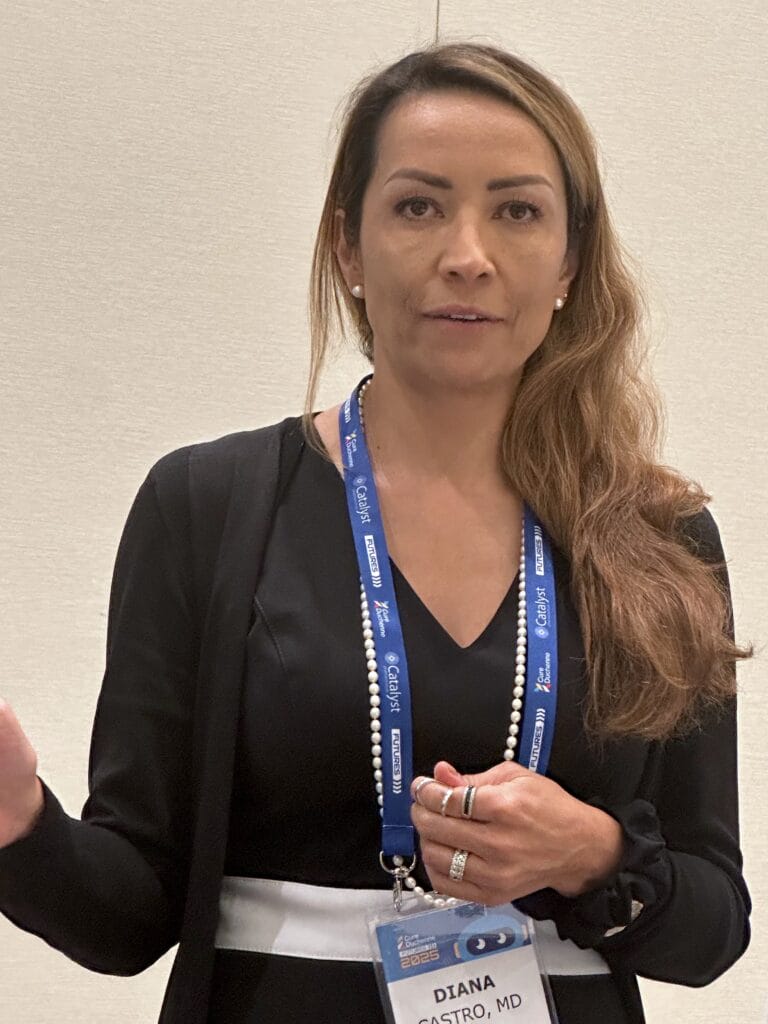
But Colin didn’t give up. Last year, she established her own nonprofit, Duchenne México Parent Project, to advocate on behalf of patients and families, like hers, who are affected by DMD.
“There was very little information about Duchenne in Mexico, so I started educating myself,” she said. “Two months after Carlo’s diagnosis, I flew to a DMD conference in Spain, where I met parents fighting for their families. I realized there was nothing like this in my country.”
The Cancún-based organization that Colin formed in 2024 is one of six comprising the Red Méxicana de Asociaciones en Distrofía Muscular (Mexican Network of Muscular Dystrophy Associations). The other five serve Chihuahua, Guadalajara, León, Mexico City and Tijuana.
Colin spoke to Rare Disease Advisor (sister brand to DMD Companion) at the recent CureDuchenne 2025 Futures conference in San Antonio. Several sessions at the event were held in Spanish, and a fair amount of attention was devoted to the challenges faced by patients with Duchenne in Mexico.
In Texas — the second-largest U.S. state, with nearly 32 million people — roughly half of the Duchenne patient population is Hispanic, said Dr. Diana Castro, a Dallas-based pediatric neurologist. “We really don’t know the reason. It’s something that we need to understand better.”
DMD’s extent in Mexico unknown without a registry
The most basic problem facing Mexico when it comes to DMD is that no one seems to have a grasp on how widespread the disease is.
The United States, for instance, is home to an estimated 342 million people, including roughly 17,000 with Duchenne. Assuming a similar prevalence, Mexico — with around 132 million residents — should have about 6,500 people with DMD. But the actual number is unknown because Mexico, among the world’s the most populous countries, lacks a DMD registry. Until 2023, it didn’t even consider Duchenne a rare disease.
“We really don’t have an estimate on how many patients there are,” said Graciela Méndez Covarrubias, president of Enlace in Chihuahua and Mexico’s representative to the World Duchenne Organization (WDO), based in Amsterdam.
Méndez formed the group in 2000 after her nephew, Eduardo Gutiérrez, was diagnosed.
“He uses a ventilator at night, and he cannot move any part of his body,” she said of Eduardo, 30, who has used a wheelchair for years. “He’s very thin, but he’s really expressive and he goes out a lot with his friends.”
Read more about diagnosing DMD
Enlace currently serves 75 boys in the state of Chihuahua and 60 in Nuevo León. Some 90% of them come from low-income families, Méndez said. Many cannot afford wheelchairs, let alone the expensive disease-specific therapies that generally are not available in Mexico.
“Because Duchenne wasn’t considered a rare disease until just a few years ago, we don’t have a registry and we don’t have statistics,” she said. “If a boy with Duchenne goes to a public hospital, they won’t register him as a Duchenne patient. Even now, they’re not doing it because we’re still missing clinical guidelines. We are working on that now.”
Much of this situation is due to a lack of funds, she added, noting that even if public hospitals “recognize the disease and follow the guidelines, they’ll need to have money to treat them, and that’s a problem. It’s really, really hard for [families] to pay for a private clinic.”
Families cross into US in search of better care
Luisa Leal heads the San Antonio-based Akari Foundation, which distributes Spanish-language information online and in print to patients and families throughout the U.S. and Latin America.

Leal’s ex-partner has two boys, Ariel and Enrique, with DMD. Her involvement with the boys led her in 2017 to establish the foundation, which currently assists 677 families in Mexico.
But it faces obstacles on both sides of the Rio Grande.
“There’s a lack of commitment from the Mexican government,” said Leal, who gave several presentations for Spanish-speaking families at the CureDuchenne event. “Whatever is done comes from the parents themselves. There are a lot of good doctors and they’re helping, but the government doesn’t get involved much.”
Because patients with Duchenne in Mexico only have access to corticosteroids and physical therapy — not more effective treatments — their families frequently try to cross the U.S. border in hopes of better care.
Yet cultural and language barriers make it hard, especially for those who are in the U.S. illegally.
“We tell people not to come undocumented, but they still do. Many are already here. Keep in mind that not everyone crosses illegally through the desert; some come with tourist visas,” said Leal, who herself was undocumented for 24 years. “If you have kids, you will do anything for them. But what we want is for families to … be able to get treatment in Mexico.”
Here’s some FAQs about Duchenne
To that end, the Akari Foundation currently has 16 full-time employees as well as 10 volunteers in Mexico. Despite a yearly budget of about $550,000, it recently opened an office in Nuevo Laredo near the Texas border, with plans to expand to Monterrey and Guadalajara.
Among other things, Leal’s foundation maintains a database for Hispanic families affected by Duchenne in the U.S. mainland and Puerto Rico, as well as for those in Mexico and several other Latin American countries. It has also been working on a registry for more than two years, and runs Spanish-language webinars for doctors and patients seeking information about the disease.
Many don’t know their disease-causing mutations
Despite Mexico’s sizable population, it’s rarely selected for clinical trials in DMD. In 2020, it was host to a study for ataluren, a medication discovered and developed by scientists at PTC Therapeutics.
Last year, the Instituto Nacional de Rehabilitación Luís Guillermo Ibarra in Mexico City became the country’s first hospital to receive accreditation from the WDO.
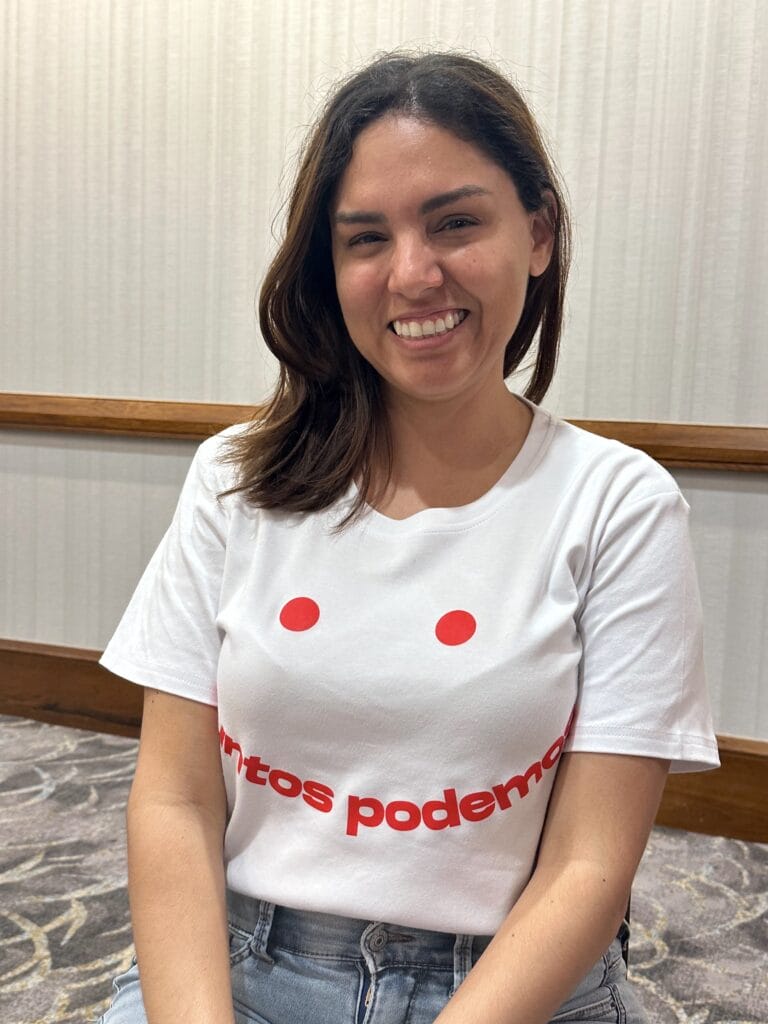
“I understand that this accreditation is a privilege, but it is also a great responsibility to be able to have the standard of care that DMD patients require,” said Dr. Rosa Elena Escobar, who leads the institute’s multidisciplinary Duchenne team.
She said her institute treats about 100 Duchenne patients from Mexico City and surrounding states. Ten or so patients in Chihuahua and Mexico City currently receive ataluren, but no exon-skipping drugs are available to boys with DMD, let alone a gene therapy.
Colin, whose son Carlo has an exon 49-51 deletion, said many parents have no idea of the DMD-causing mutations affecting their boys.
“As Latin Americans, we tend to have a lot of children,” she said. “I already know one family that has five boys with Duchenne, and another with four boys. These families don’t know the mutation because they live in a rural area. They just went to a doctor, like I did, and were told there’s nothing they can do.”
Even worse, the boys likely are not on steroids.
“I’ve heard from a lot of families in Mexico that their doctors don’t even know they can take steroids — something that is already available in Mexico,” Colin said. “I’ve also heard of boys who are getting biopsies to confirm Duchenne, even though there’s already a genetic test or you can even check [creatine kinase (CK)] levels” in the blood.
Colin’s organization, Duchenne México, has three full-time employees; she funds the charity out of her own pocket.
“My son is getting treated in Spain, so we feel blessed,” she said. “But I don’t want any more families to have to leave the country just to get treatment for this disease.”
Listen to an interview with Ileen Colin del Río on Rare Disease Advisor, a DMD Companion sister site: An Interview With Ileen Colin del Río, President of Duchenne Mexico
Sign up here to get the latest news, perspectives, and information about DMD sent directly to your inbox. Registration is free and only takes a minute.
