
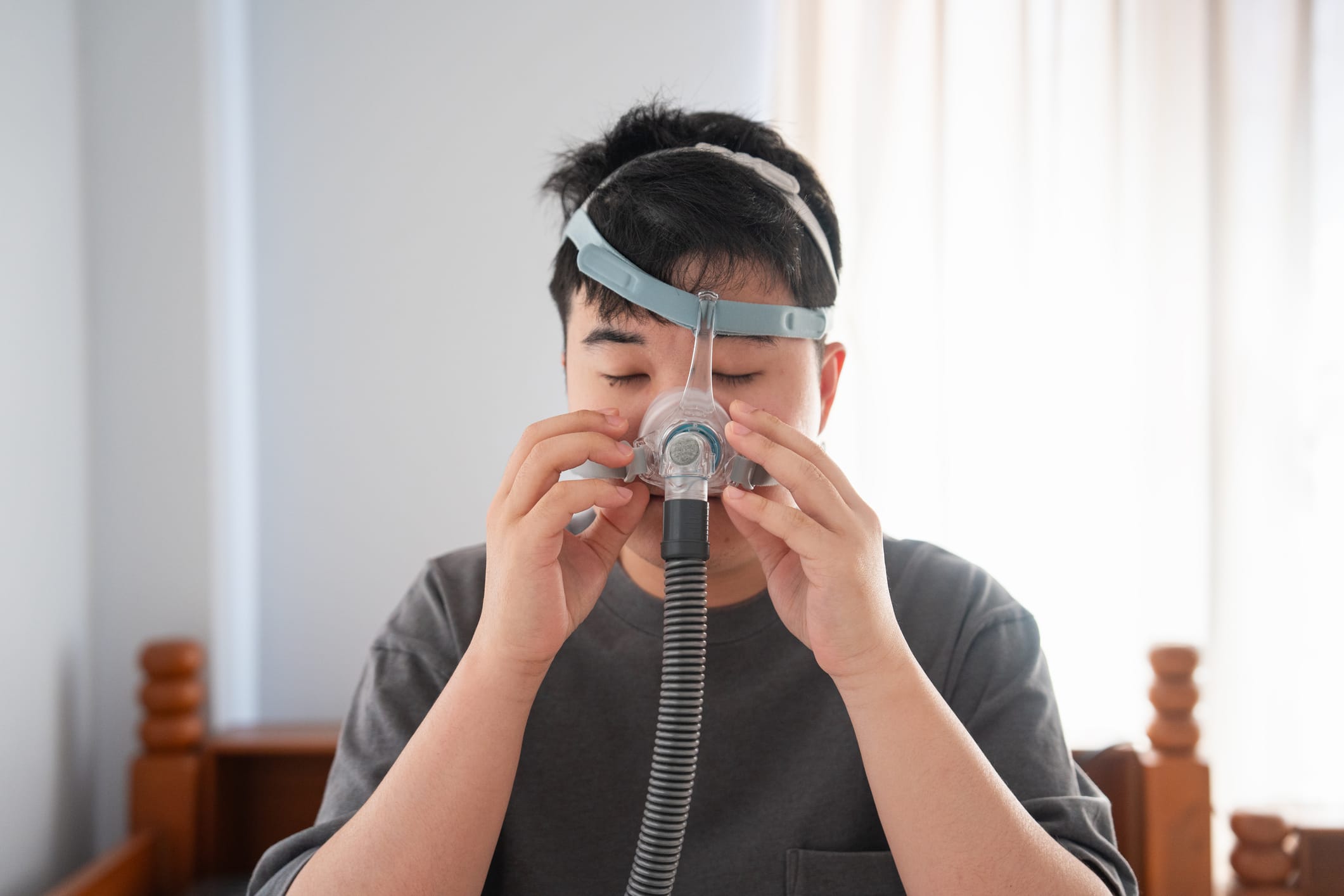
A bilevel positive airway pressure (BiPAP) machine can help people living with Duchenne muscular dystrophy (DMD) breathe more easily at night after diaphragm and respiratory muscles become weakened. It helps the body breathe in oxygen and breath out carbon dioxide for better, more restful sleep. Though BiPAP machines carry many benefits, those with DMD often have a hard time getting used to them. These tips can help.
What is a BiPAP machine?
A BiPAP machine isn’t the same as a breathing tube — they’re noninvasive. The machine consists of a motorized unit that generates airflow, a flexible tube to carry the air and a face or nasal mask that delivers the air.
The machine delivers two levels of air pressure to the lungs:
- Higher pressure when inhaling.
- Lower pressure when exhaling.
Why use BiPAP?
A BiPAP machine may be recommended by a pulmonologist or neuromuscular specialist after a sleep study or lung capacity test confirms a patient has shallow breathing at night. Breathing during sleep becomes shallow (called hypoventilation) when the diaphragm and other breathing muscles are weakened as a result of DMD. When these muscles are strained, it becomes more difficult to get enough air, especially at night. Some people with DMD start using a BiPAP machine as early as 10 years old. Patients may eventually use the BiPAP machine during the day, as well.
For people living DMD, BiPAP can mean:
- Better sleep quality.
- Less daytime sleepiness.
- Reduced headaches.
- Slower progression to more invasive ventilation.
- Improved quality of life.
Learn more about DMD treatment and care
Tips for using a BiPAP machine
It may take time to get used to a BiPAP machine: the face or nasal mask may feel uncomfortable at first, and the pressurized air may be an odd sensation. Here are some ways to make the process easier:
Start off slowly: Test the machine for short sessions during the day before using it all night.
Increase use gradually: When you feel at ease, start to prolong your BiPAP machine usage.
Customize your use of the machine: Choose a mask you find to be comfortable, and adjust the settings to enhance comfort and effectiveness. You may need to try out several face and nose masks before you find the right fit.
Create a comfortable sleep environment: Adjust pillows and sleep position to ensure optimal comfort when sleeping.
Be consistent: Daily use, as part of your regular routine, will mean better results.
As the BiPAP machine becomes part of daily life, you’ll need to maintain its effectiveness by keeping it clean and adjusting the settings to fit changing needs. The filters, mask and even the tubing will need to be cleaned regularly.
It’s also important to report in with your pulmonologist regularly to assess the effectiveness of the BiPAP machine.
Sign up here to get the latest news, perspectives, and information about DMD sent directly to your inbox. Registration is free and only takes a minute.
