
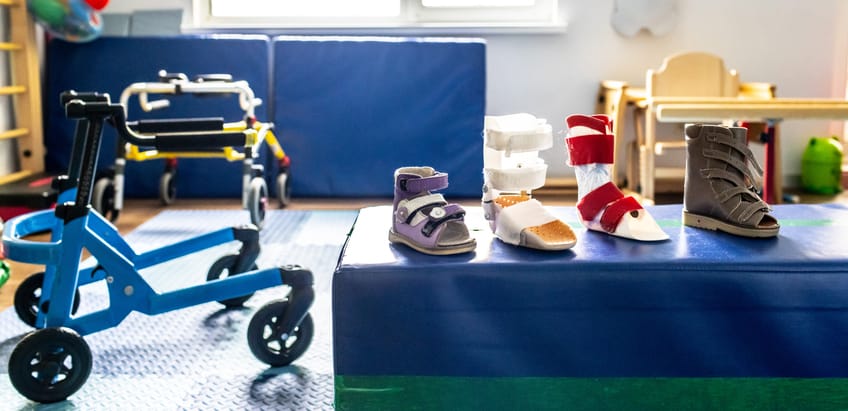
“Moon boots” — also called ankle-foot orthoses (AFOs), night splints or braces — are worn at night by people with Duchenne muscular dystrophy (DMD) to help keep the ankle in alignment. This helps people with Duchenne maintain mobility for as long as possible.
Why are AFOs worn at night?
The use of moon boots as a night splint is often introduced soon after diagnosis to help preserve mobility.
As calf muscles lose strength and flexibility, they shorten and become tight. This pulls on the Achilles tendon, leading to cramping and trouble walking. AFOs keep the foot and ankle in a neutral position, which allows the joints to be stretched to reduce contractures. This helps improve ankle flexibility, and plays a part in maintaining walking ability in children and young adults with DMD. Prolonging mobility is important for independence and as a consequence, quality of life.
AFOs are usually worn overnight so that the joint can be stretched for a longer period of time. The usage of moon boots is not usually recommended during the day as they can cause falls and put extra strain on the thigh muscle.
Learn more about DMD treatment and care
Tips for moon boot wear
To ensure comfort and support, moon boots must be correctly fitted. If they are too loose, they can rub and cause skin irritation. If they are too tight, they can put pressure on the toes, create pressure sores and lead to worse foot posture.
AFOs shouldn’t hurt: Any discomfort or swelling after use should be followed up with the orthotist or physical therapist, so they can make adjustments.
For added comfort, follow these tips:
- Wear a clean, wrinkle-free, knee-high sock to prevent rubbing.
- Check that the foot position is correctly aligned, with the heel at the back of the boot.
- Fasten the straps carefully, to ensure they’re not too tight and not too loose.
- Monitor for discomfort or fitting issues, change sizes as the feet grow.
- Make the moon boots part of your child’s night-time routine to reduce resistance to wearing them, including stretching and massage.
- AFOs are just one of many reasons why it’s important to work with a physical therapist who is familiar with Duchenne: Your child’s PT will recommend the right type of ankle night brace for them, which may mean custom-made orthoses.
- Follow up regularly with your physical therapy team for feedback.
Sign up here to get the latest news, perspectives, and information about DMD sent directly to your inbox. Registration is free and only takes a minute.
