
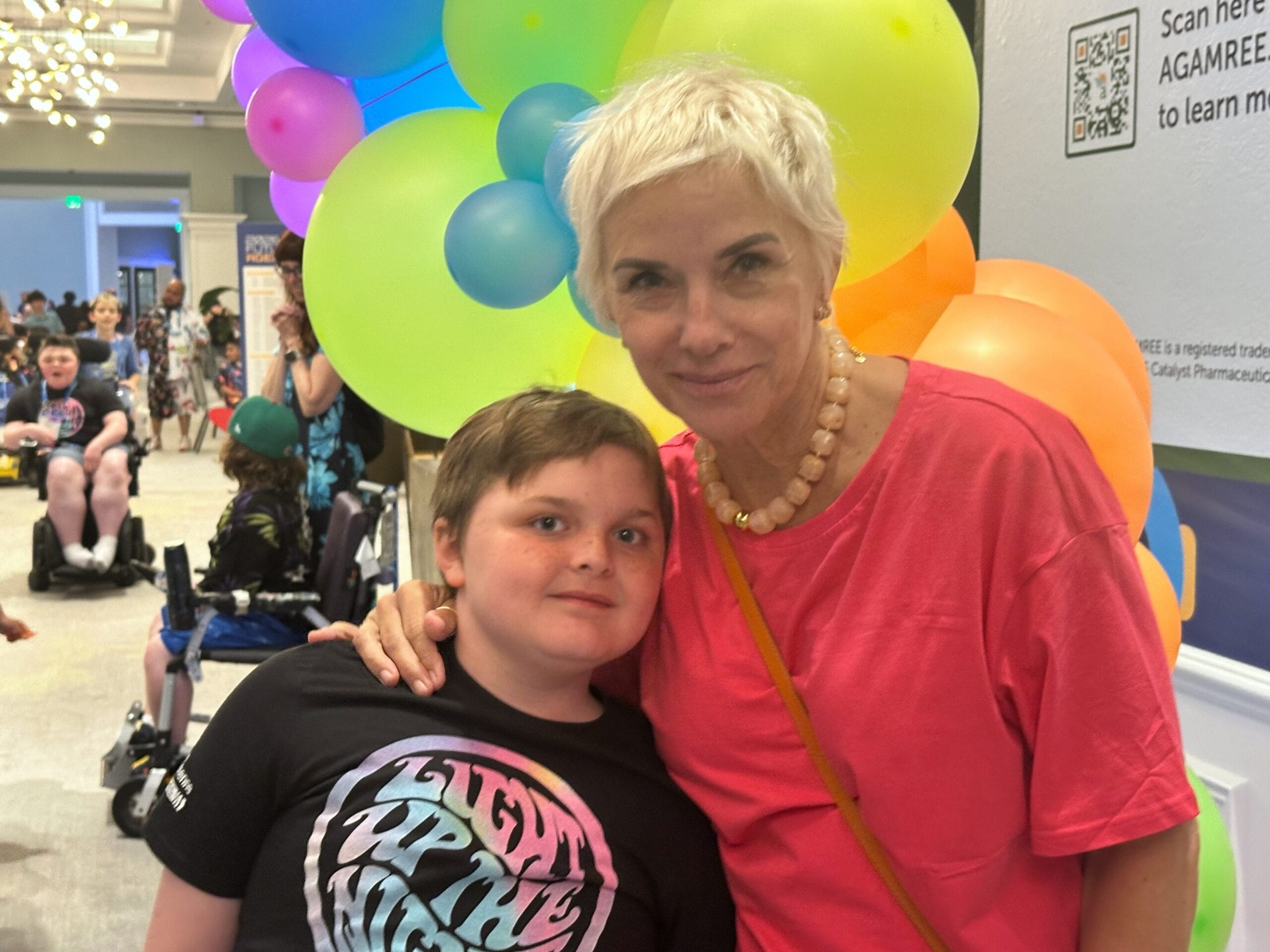
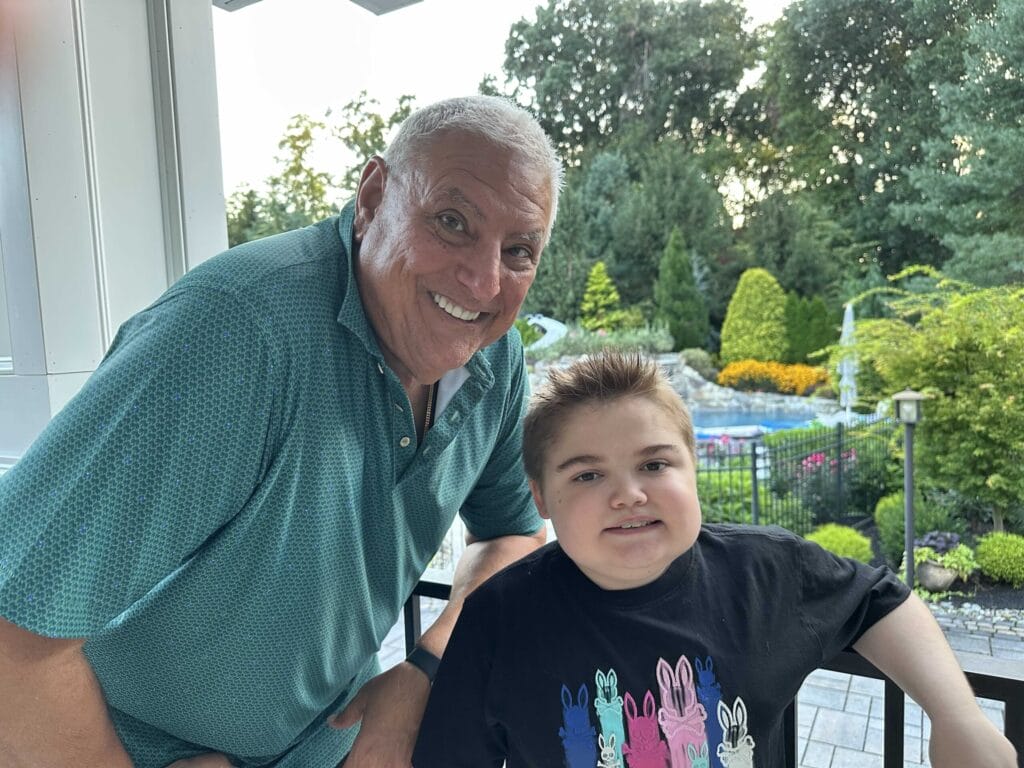
Rich Savino, 71, of Manalapan, New Jersey, owns a chain of Ford and Subaru auto dealerships. He also has a 13-year-old grandson, Chase, with Duchenne muscular dystrophy (DMD).
Chase was diagnosed in 2019 at age 6, after his family noticed he had trouble playing T-ball with other kids.
“At first, his parents thought he was just a little lazy or maybe not engaged, so they took him out of T-ball,” Savino said. “Chase loves ice hockey and he wanted to learn how to play, so I took him for lessons with his cousin, who’s about the same age. My other grandson went down on the ice and got right up, but Chase couldn’t stand up. After three or four lessons, he still couldn’t get up.”
Savino persuaded his son, Christopher, and his daughter-in-law, Trish, to take Chase to a pediatrician. When the diagnosis eventually came back as DMD with a mutation in exon 3, Savino wasn’t completely surprised; the son of one of his close friends also has Duchenne, so he was quite familiar with the disease.
“From that point on, I was very actively involved,” he told DMD Companion. “I embedded myself in research the moment he was diagnosed.”

Subscribe to our free monthly newsletter to get the latest news, perspectives and information about Duchenne sent directly to your inbox.
‘Crusaders for the cause’
Savino is among a growing number of grandparents across the country taking an active role in the care and treatment of their grandsons with Duchenne.
Another is Kate Miner Moebel of Dallas, Texas. She has 12 grandchildren, including Shep, who was diagnosed with Duchenne in 2019; he has duplication of exons 40, 41, 42 and 43.
“Since that day, our family has turned into crusaders for the cause,” she said in a testimonial for the nonprofit group CureDuchenne. “It has been my privilege and honor to use every trick, tool, and trade God has given me to raise awareness and money for a cure.”
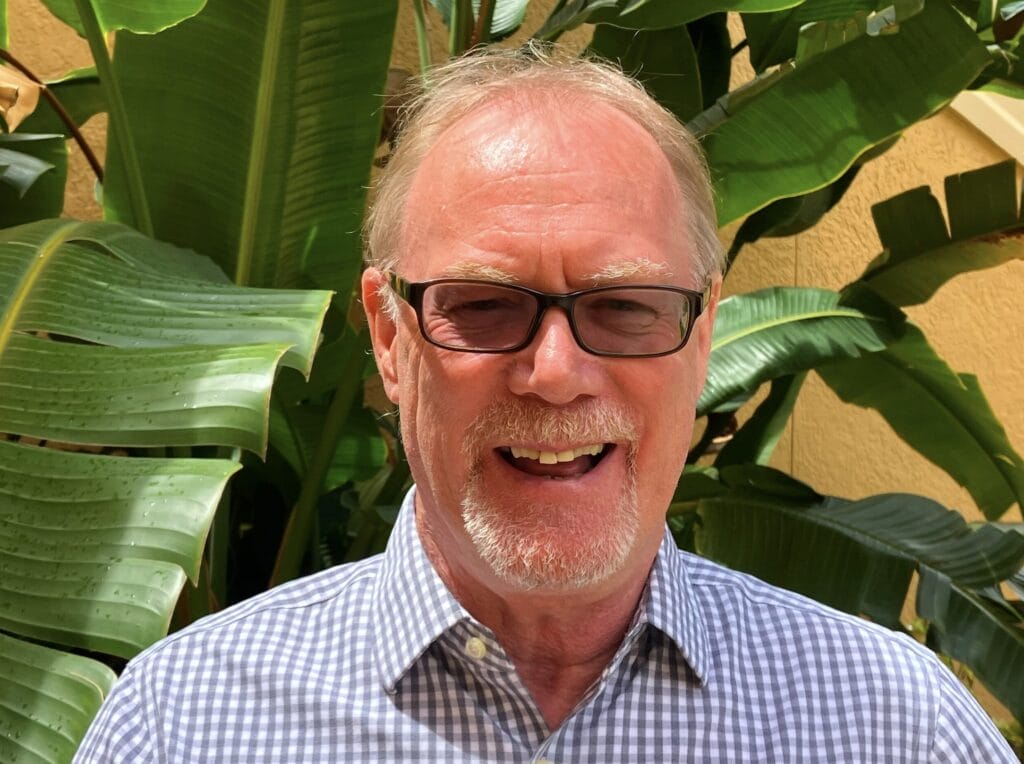
Moebel, 59, said in an interview that she discovered CureDuchenne only three weeks after Shep’s diagnosis — and picked that particular charity because of its focus on research. Since then, the professional singer and musician has managed to raise $400,000 through concerts and other fundraising events.
“When I go talk to people, the only thing I have is my story. And what I have to do in those three minutes is explain what’s happening to every muscle in the skeleton, and the heart and lungs. Finding an audience for a rare disease is very difficult, but I’m pushing hard — in Dallas, Austin, Houston and San Antonio.”
Moebel said all the money she raises goes to the CureDuchenne clinic founded by pediatric neurologist Dr. Diana Castro in Flower Mound, Texas.
“You can be on Capitol Hill and do so many other beautiful ways to help, but if you do not do the research, you have no reason to go anywhere else,” she said. “It grieves me that so much money is being spent on other things.”
Moebel added: “Shep is my grandson, but at least 300,000 other families in the world have also received this horrific diagnosis. How could you not want to invest in what we’re doing?”
‘Your kid needs you. Your grandson needs you.’
Dr. Michael Kelly is chief scientific officer at CureDuchenne. In mid-August, he spoke about the disease during a private webinar organized every month specifically for grandparents. The next such meet-up is set for September 16, 2026.
“Duchenne takes a toll on family dynamics. And we’ve witnessed lots of families struggle financially and emotionally,” Kelly said. “Grandparents play a really important role. They share the journey and help in so many ways, including practical support such as taking the boys to their medical appointments. They’re the glue that can help keep a family together.”
Jim and Jeri Houstoun know all about that first-hand.
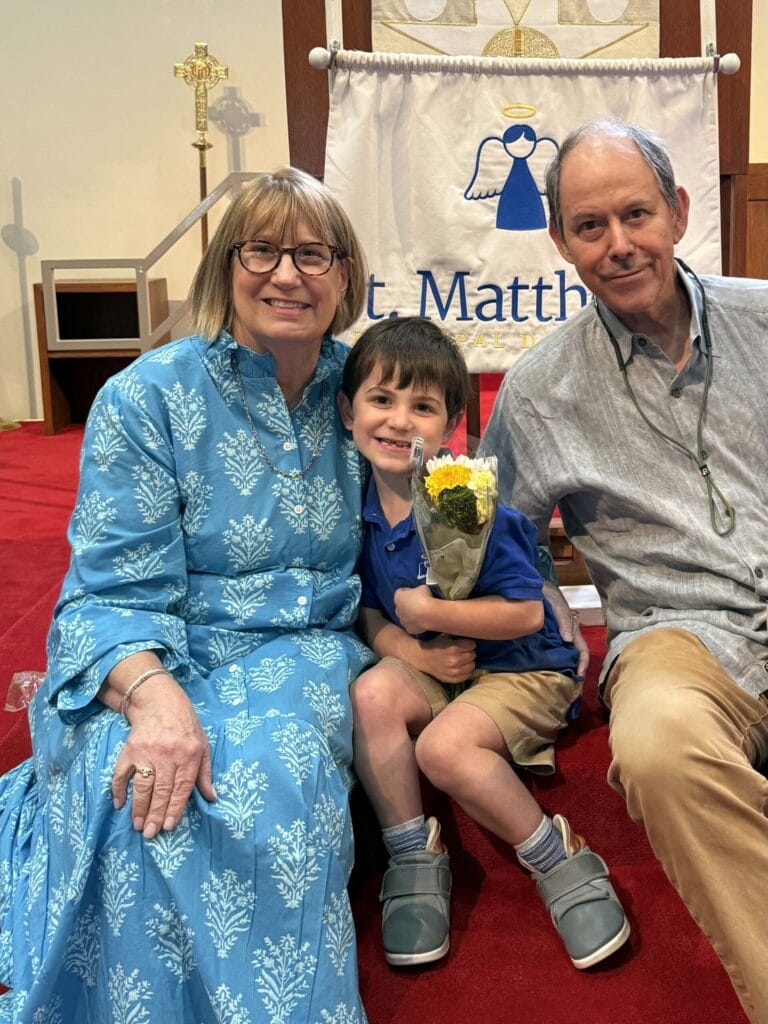
The grandparents of 6-year-old Fritz, the Houstouns live in Austin, Texas. The oldest child of their son Dillon and his wife, Caitlin, Fritz was diagnosed at age 3 with mutations in exons 7, 8 and 9.
“The fact that Fritz didn’t get Duchenne genetically but was a random mutation made it in some ways more difficult to understand and accept. It was like being struck by lightning,” said Jeri Houstoun, 73. “But after the initial shock and grief, what came over our family was a sense of joy and gratitude that forced us to focus on the moments we’re together, instead of the future.”
Added Jim Houstoun, 69: “It’s a double-barreled concern. You’re watching your grandson struggle with this disease, but also your own son and his spouse. It’s painful for us.”
The Houstouns, who have six grandchildren, are both retired and have time to take Fritz to his medical appointments as well as equine therapy. The family is involved with CureDuchenne as well as the nonprofit Parent Project Muscular Dystrophy, and they closely follow new developments in DMD.
For now, Fritz uses a power wheelchair and attends public school; Jim Houstoun said his grandson struggles with attention deficit disorder, though some of it could be the result of the steroids he takes.
“The hope that has been generated in the short period of time since Fritz was diagnosed is amazing,” he said. “But I feel for the parents who started this journey 20 or 25 years ago.”
Savino, who does pool workouts with Chase, also accompanies him to his doctor appointments at Children’s Hospital of Philadelphia, about 45 minutes away in Pennsylvania. He still manages his dealerships, but these days he comes home around 3 or 4 p.m. in order to spend more time with his grandson.
“Our houses are next door to one another, so we had a little blacktop road built between the two so Chase wouldn’t have to go through the grass and trip,” he said, adding that although Chase can still walk, he enjoys driving back and forth in a golf cart. Savino has also installed an elevator in his home so Chase could have full access to all three floors.
“I take Chase to physical therapy twice a week. I also stretch him one night a week along with my wife, who is his grandmother,” Savino said. “We’re very close. I’m probably with Chase three to four times a week.”
Asked if Savino had any advice for other grandparents of boys with Duchenne, he offered the following suggestion: “I know parents who really wish their siblings and parents would be more involved. It’s heartbreaking to not see all the grandparents actively engaged in trying to help their sons and daughters. It’s so difficult for them to carry on without family support.”
He added: “What I’d like to say is that your kids need you. Your grandson needs you from a disease perspective, but you must support the family. And if they don’t live nearby, then at least call them every day.”
Read a grandparent’s story firsthand: “William’s world: A grandmother’s journey through Duchenne”
