
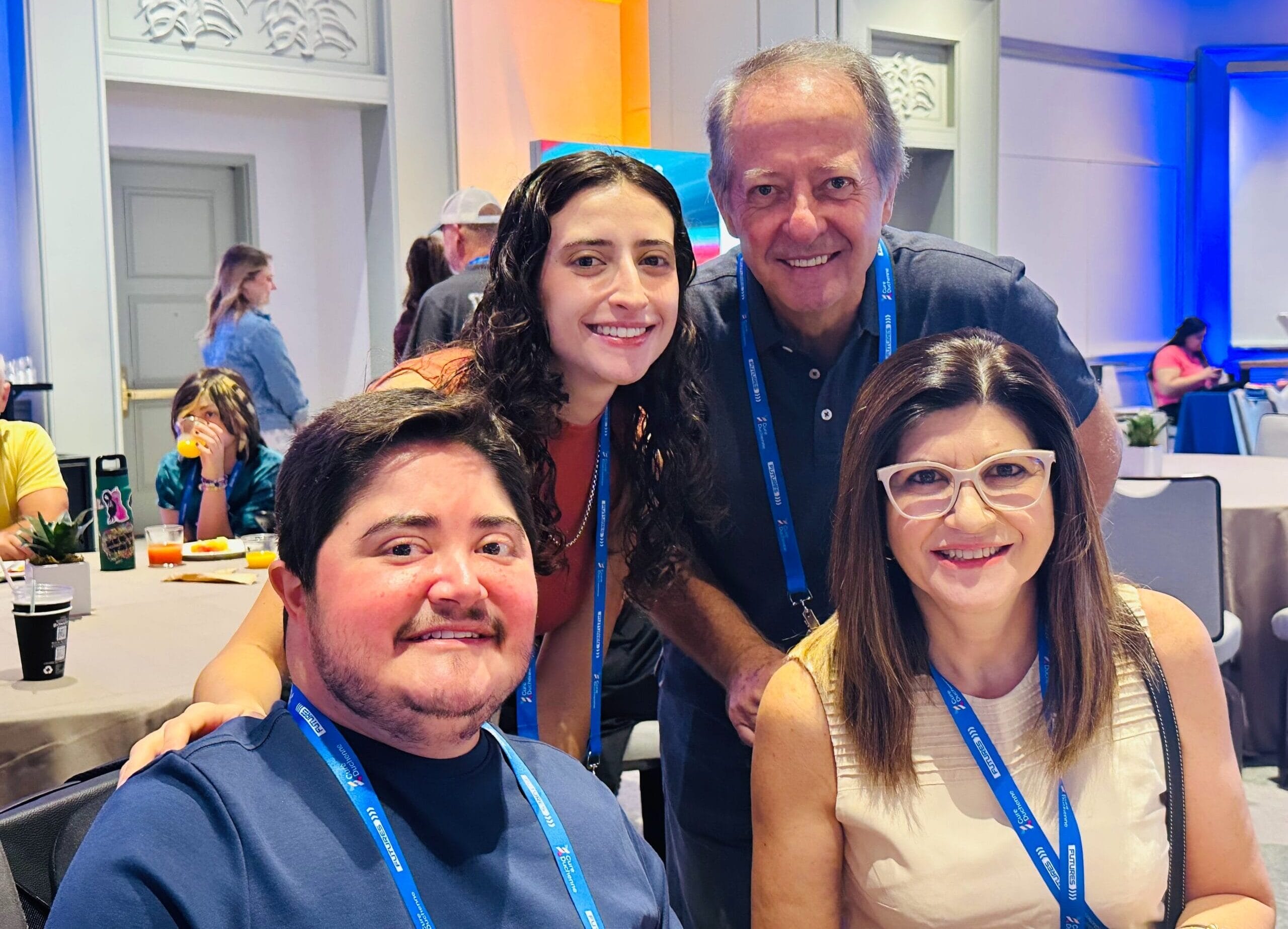
ORLANDO, FL— Jack Wolf of Broadview Heights, Ohio, is 26 and studying for his doctorate in education and organizational leadership at the University of Dayton.
Darrel Nicklow Jr., 28, of Arcadia, Florida, is a content creator whose YouTube channel, DNICK Productions, has thousands of subscribers. And Gui Panhota, 29, of São Paulo, Brazil, graduated in economics from one of Brazil’s top universities and now runs his own company.
All three men have Duchenne muscular dystrophy (DMD). All now use wheelchairs, and all of them have lived longer than anyone originally expected them to at the time of their diagnosis.
Thanks to the widespread use of corticosteroids, the emergence of exon-skipping therapies and advances in both cardiac and respiratory management, life expectancy in DMD has improved dramatically over the past 20 years. According to a 2021 paper, those born before 1970 lived an average of 18.3 years, while babies born with DMD after 1990 could expect to live 28.1 years — a jump of more than 50%.
“People would tell me, ‘you’re not gonna make it past 18 or 20 or 25,” Nicklow said. “Well, I made it past all those numbers and I’m still here.”
‘A journey of hope that is being rolled out right in front of us’
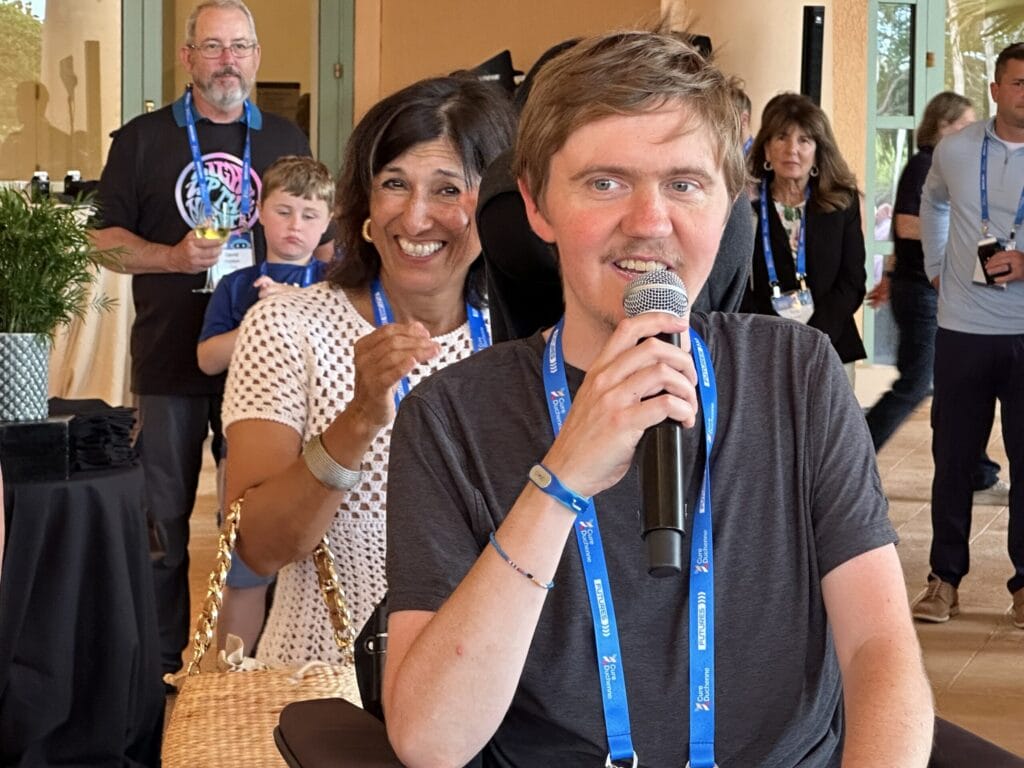
Nicklow and his friends participated a fireside chat about careers, relationships and healthcare during CureDuchenne’s recent 2026 FUTURES conference here. The discussion was moderated by 29-year-old Hawken Miller, whose own DMD diagnosis in 2001 led his mother, Debra Miller, to start the organization the following year.
“We want to focus on the bright future these guys can have,” Debra Miller told her audience, predicting that — while she doesn’t expect an outright cure anytime soon — three or four new drugs will win U.S. government approval to treat Duchenne over the next 12 to 18 months.
“We work really hard to bring people not touched by Duchenne into our community. There are parents in this room who have worked for years for treatments that will never help their own children,” she said. “We want drugs for non-viral delivery, full-length dystrophin, and muscle regeneration, but we can’t do it without you.”
Dr. Brenda Wong has been chief medical advisor for CureDuchenne since January 2026. The longtime director of the DMD program at the University of Massachusetts Chan Medical School in Worcester, Dr. Wong has been treating people with Duchenne for 27 years.
“It is really heartwarming to see my 3- and 4-year-olds from 24 years ago not only surviving, but thriving, as young adults,” she said, noting that she first treated Hawken Miller when he was 11. “We’re at a point where, as providers, we have to discuss with families the benefits and risks of combination therapies with new drugs. This is just a sign of the tremendous progress we have made in clinical trials since the first clinical trial for Duchenne happened in 2006. It’s a journey of hope that is being rolled out right in front of us.”
‘I’m doing all this on my own’
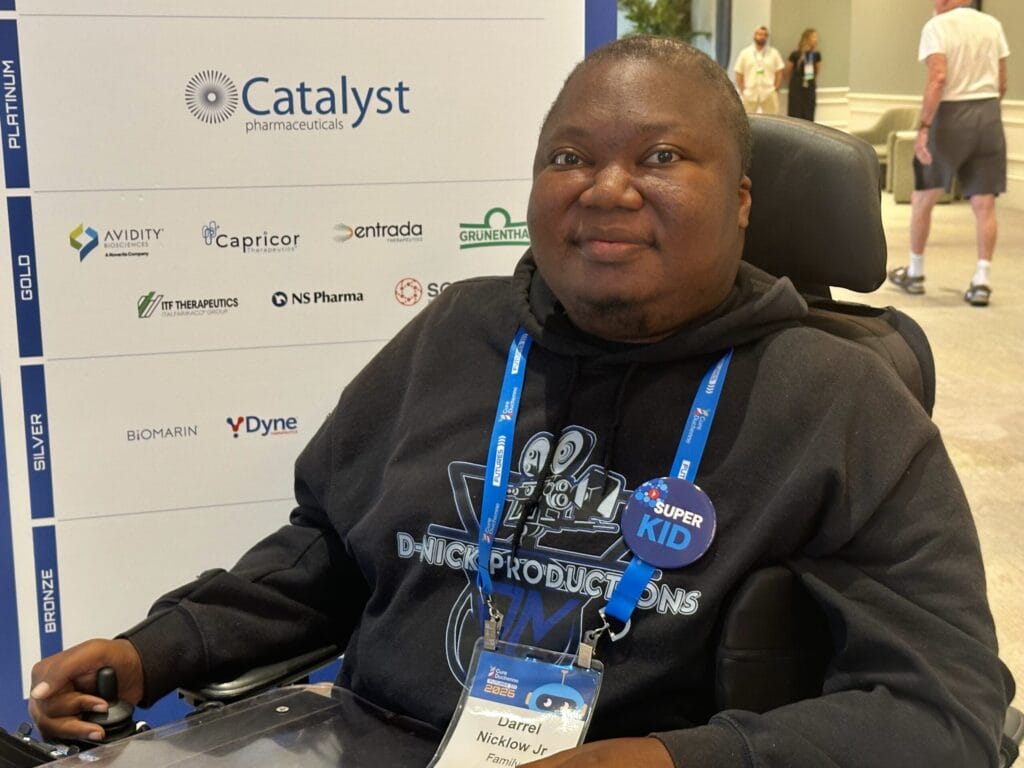
Nicklow is living proof of those medical advances. At age 13, he underwent a heart transplant, then went on to earn his bachelor’s degree in digital media design from Florida Gulf Coast University in Fort Myers. Currently, he takes 21 pills a day, including prednisone; he also receives the exon-skipping therapy eteplirsen (Exondys 51).
None of this has stopped Nicklow from pursuing his goals or made him feel sorry for himself.
“I feel like we’ve got a life to live, and we don’t have to talk about what we have, or ‘woe is me.’ We don’t need sympathy from people,” he said, adding that strangers often underestimate him. “They don’t think I can compete with them because I’m in a wheelchair. But I’m doing all this on my own. I make my own videos and write the scripts myself. At night, I’m in bed dreaming about what I’ll do before the next day happens.”
An international education
Panhota, like many Brazilian boys, dreamed of being the next Pelé.
“When I was 9 years old, I wanted to be a soccer player. But that didn’t work out,” he said with a laugh, glancing at the wheelchair he’s used since the age of 17. However, Panhota was relatively lucky in that his exon 45 mutation is relatively mild.
“When I was diagnosed in 2001, few doctors in Brazil knew about Duchenne,” he said. “My parents were very worried about my education, and if I could study in a good school that was wheelchair-accessible. So they decided to build a school that would be accessible for me.”
Panhota’s father is an engineer, and his mother teaches English. That school, located in the suburb of São Caetano, was inaugurated in 2004 and today has 1,500 students.
In 2016, the young man spent half a year as an exchange student at West Virginia University in Morgantown, studying economics and business management. He wrote his thesis on anti-competitive regulatory issues and has worked at Moody’s and Bank of America as a corporate analyst.
Panhota belongs to the Aliança Distrofia Brasil, a national organization that represents the 20,000 or so Brazilians with muscular dystrophy. For now, he takes only steroids as well as a cardiac medication to protect his heart.
Making achievement more accessible
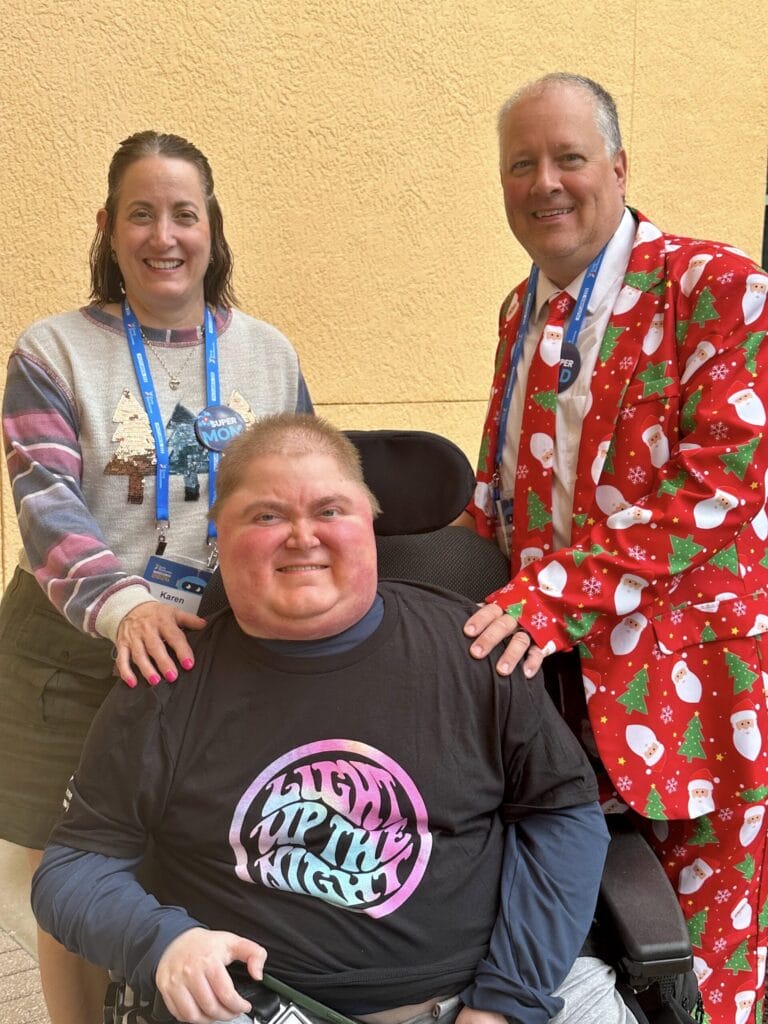
Wolf has spent much of his life involved with Boy Scouts of America. An Eagle Scout, he’s earned a whopping 102 out of 135 possible merit badges and became one of only seven scouts nationwide to earn the Albert Einstein Supernova Award. He later helped establish the Lake Erie Council’s Accessibility & Inclusion Committee, and his doctorate dissertation is on how to make scouting more accessible to individuals with disabilities.
He even plays the euphonium — a tuba-like instrument — in a marching band.
Wolf drives a Dodge Caravan that’s been specially adapted with a joystick. After getting his driver’s license, it took him three weeks of training just to learn how to use the modified vehicle.
“It’s important to have a great support system and parents who encourage me to go after my goals,” said Wolf. “And you can always make accommodations to fit your needs.”
Sign up here to get the latest news, perspectives, and information about DMD sent directly to your inbox. Registration is free and only takes a minute.
