
In March, I wrote about my mission to keep the doors open for my grandson, William. At five and a half years old, living with Duchenne muscular dystrophy (DMD) means every day is a race against time. By then, we had been invited to Brussels for the screenings to get into the Natural History Study — the bridge we must cross to reach gene therapy. Both appointments were already booked, and I believed the path was secure. I thought we were as good as “in.”
I didn’t realize that the “handle” on that door was a test I wasn’t prepared for.
The “handle” on the door
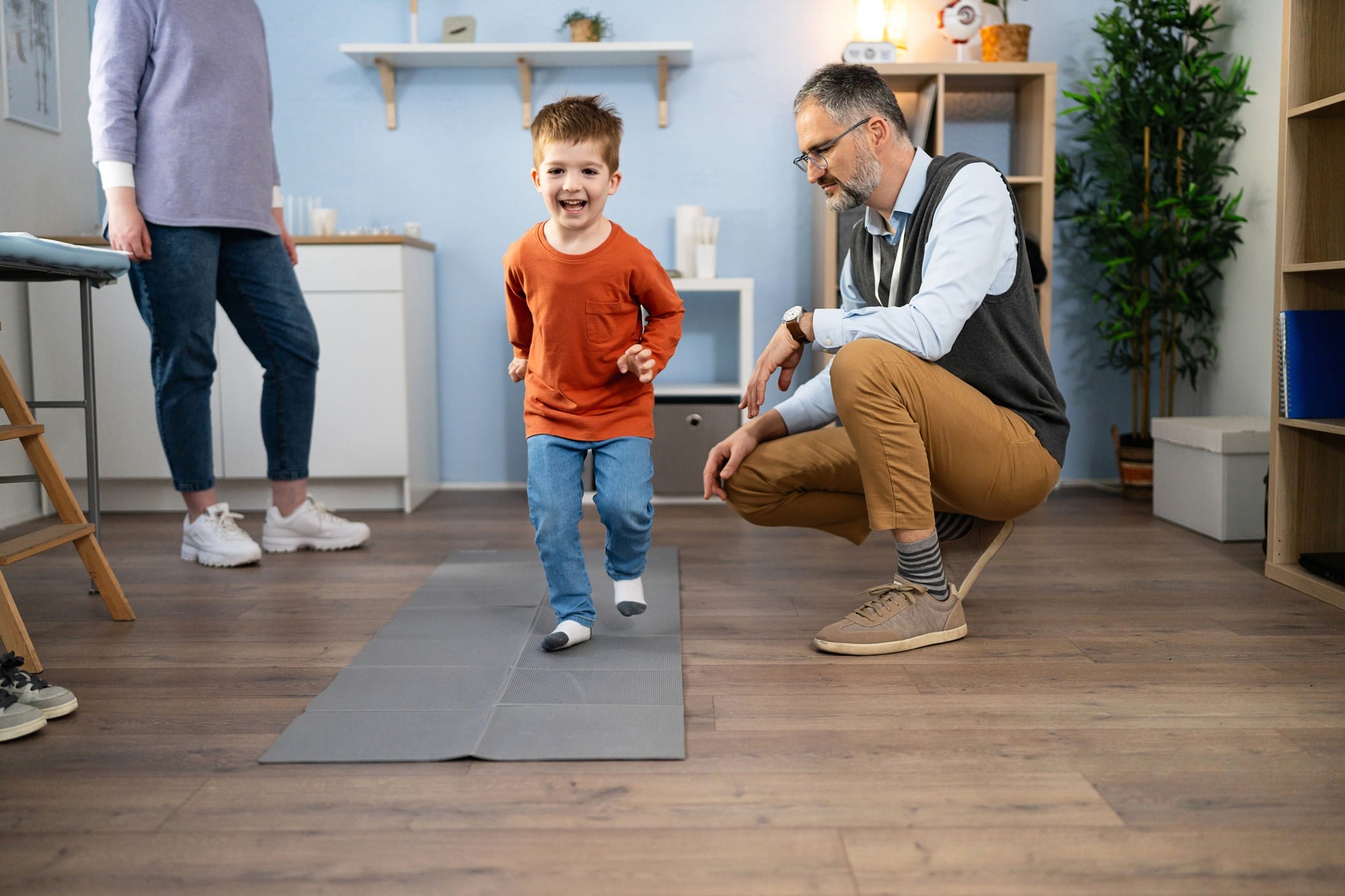
We went to Brussels for the first screening with total confidence. We signed all the papers, but then we went to see the physiotherapist for the North Star Ambulatory Assessment (NSAA) test. At the time, I thought this was just a routine collection of data. William is an active child, and I didn’t see any danger. I didn’t realize that the test was full of specific exercises that children with Duchenne naturally avoid.
Something deep down in my head asked, “Why are we doing these strange exercises?” but I didn’t ask it out loud. I was too relaxed, and the physiotherapist conducting the test wasn’t firm either. She didn’t explain that the score was key for getting into the trial. I let William be his usual hyperactive self, distracted by a tiny screw on the floor, and I didn’t push him.
The shock came three days later when the leader of the clinical trial sent the email. William had scored only 13. The minimum to enter the trial was 18. Because he didn’t pass, he wasn’t eligible. Suddenly, the door wasn’t just closing; it was locked.
The second chance
However, the doctor didn’t give up on us. He saw how hyper William was and understood that the new environment and the pressure didn’t suit him. He offered us a second chance: we would convert the second screening appointment — which was already booked for an MRI and a full checkup — into a rescreening.
We had only seven days. The failure wasn’t just about focus; it was because William had never practiced these movements before. Because he has been tiptoeing since day one, keeping balance on one leg and jumping is almost impossible. As I trained him at home, I realized that if we had practiced these things every month just for the sake of balance, it wouldn’t have been a problem.
I turned our house into a training camp. I used the daily massages I have always done specifically before our exercises to help get oxygen to his muscles. It was emotional. At one point, William looked at me and said, “Nana, I can’t do it. My muscles are dying.” I swallowed my tears and looked him in the eyes. I had to be strong for him. I told him our new pact: “If you try very hard now, the doctors can help your muscles stay strong later.”
The 19th point
When we returned to Brussels for the rescreening, I spoke with the doctor. He was surprised that William hadn’t passed the first time because William is still able to stand up from the floor in under three seconds. He saw then that his hyperactivity and lack of practice just didn’t suit the first test.
This time, we changed our approach. We let William explore the room for a few minutes first, and then I stepped in to keep him focused. He worked harder than I have ever seen. He still struggled with the balance on his tippy-toes, and he still skipped things I knew he could do, but he didn’t give up. When the score came back, he had reached 19 points.
That 19th point was the miracle we needed. Since that moment, we have been officially accepted into the study.
Looking ahead
That marathon changed our journey. Because we fought for those points, William is now on the right path. We have six months of observation ahead of us in the Natural History Study. Whether he is placed in the gene therapy group or the placebo group first, we are on the path to treatment.
In March, I said I was keeping the door open. Last month, I realized that even when the door is open, you have to know how to walk through it. We are at the bottom of the scale, but we are on it — and that is the only place we need to be.
The journey has finally begun. Completing this Natural History Study is the bridge meant to lead William to gene therapy in October, but one last obstacle remains. We are waiting for the AAV8 antibody results; if they come back positive, the door we have fought so hard to reach will stay closed. This is the new challenge my mind must now face.
Sign up here to get the latest news, perspectives, and information about DMD sent directly to your inbox. Registration is free and only takes a minute.
