
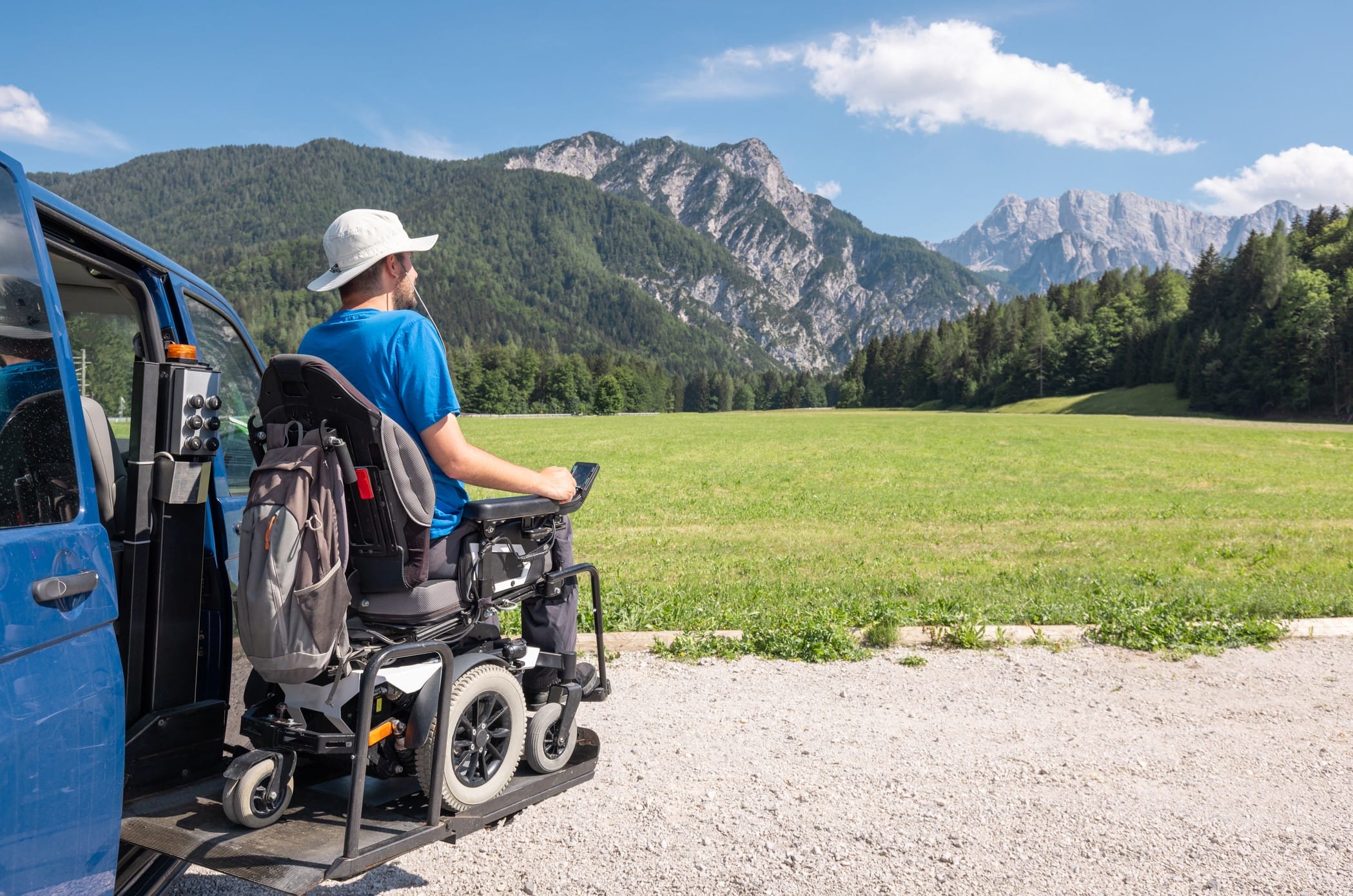
When people think about travelling with a disability like Duchenne muscular dystrophy (DMD), the flight is usually the first thing that comes to mind. Airports and airplanes can feel like the biggest hurdles. But from my experience, the journey is much more than just the flight. Once you arrive, you have to think about getting to your hotel, finding accessible transport and getting used to the barriers that can come along with a change of scene.
Over the years, I’ve found that the more I prepare before I leave to head away, the easier it is to relax when I arrive. Planning can’t guarantee everything will go smoothly or according to plan, but doing some research ahead of time has definitely saved me a lot of stress.
Read Conor’s guide to flying with DMD: Come fly with me! My journey to flying with Duchenne
Accommodations that are actually accessible
One of the first things I check is where I’ll be staying. Just because a hotel says it’s “accessible” doesn’t necessarily mean it’s accessible for my needs.
If I can, I contact the hotel before I travel and ask specific questions. Is there step-free access across the hotel? Is the bathroom fully accessible? Does it have a roll-in shower? Is there enough space for my wheelchair?
Sometimes I ask for photos if I can’t find them online. It might seem like a lot, but from past experience I’d rather know what to expect than be surprised after a long day.
I also pay big attention to location. A hotel might look great, but if it’s far away from everything or is surrounded by steep hills and uneven pathways, it most likely won’t be accessible for me and my needs. I like to stay somewhere close to public transport, restaurants or the places I want to visit. Sometimes spending that little bit extra for a better location saves a lot of trouble later.
Sign up here to get the latest news, perspectives, and information about DMD sent directly to your inbox. Registration is free and only takes a minute.
How I’ll get around
The next big thing I look into is transport.
Every city is different. Some have great public transport, while others still need to be improved. Before I travel, I usually check how accessible the local transport is. I check whether train stations have lifts, whether buses have ramps and whether accessible taxis are easy to find. Sometimes I find that getting around will be much easier than I expected. Other times, I find that I’ll need to change my plans slightly. Either way, I’d rather know before I leave than spend my holiday trying to figure everything out on the spot.
If I’m renting a vehicle, there’s even more to think about. Depending on who I’m travelling with, we might need a big van to accommodate my wheelchair and luggage. Not all rental companies offer accessible vehicles, so it’s best to book early, in my experience.
I also like to research the places I want to visit before I leave. Luckily, it’s much easier now than it used to be years ago. Many attractions share access information on their websites, and you can often find reviews from other disabled people.
Street View and satellite maps are also really helpful. They give you a better idea of entrances, parking and footpaths than just an address can!
Squeezing everything in
Packing has become a bit of an art for me too.
Instead of packing at the last minute, I usually make a checklist a few days before I travel. My list includes medications, adaptors, spare cables, important documents and anything else that would be hard to replace while I’m away. Checking things off gives me peace of mind and helps me avoid worrying that I’ve forgotten something after I’ve left.
I also try not to pack my schedule too full.
When you’re excited to visit somewhere new, it’s easy to want to plan every hour of every day. But I’ve learned that leaving time to slow down makes the trip better. Travelling can be tiring, especially if you have a condition like Duchenne muscular dystrophy, so giving yourself time to rest isn’t wasting your holiday: It’s making sure you can enjoy the rest of it.
Accepting the unexpected
Of course, no matter how much you prepare, unexpected things can still happen.
Lifts break down. Accessible toilets may be out of order. Public transport can be delayed. I’ve learned that being flexible is just as important as planning. If something doesn’t work out, there’s usually another way. It can be frustrating, but I’ve found that staying positive helps me enjoy the trip instead of worrying about what went wrong.
The best memories rarely come from everything going perfectly. They come from experiencing new places, meeting different people and seeing how other cultures live.
I always remind myself that asking for help isn’t something to feel awkward about. Whether it’s hotel staff moving furniture or someone helping with a heavy door, most people are happy to help. Traveling has shown me that kindness is everywhere within different cultures.
Travelling with Duchenne means thinking about things many other travelers probably never consider. It takes more planning and a bit more patience, but it has never stopped me from wanting to explore the world.
Every trip teaches me something new, and every place I visit reminds me that these extra steps I take are worth it. For me, travel isn’t simply about getting from one place to another. It’s about the experiences you have along the way, and those memories stay with you forever.
