
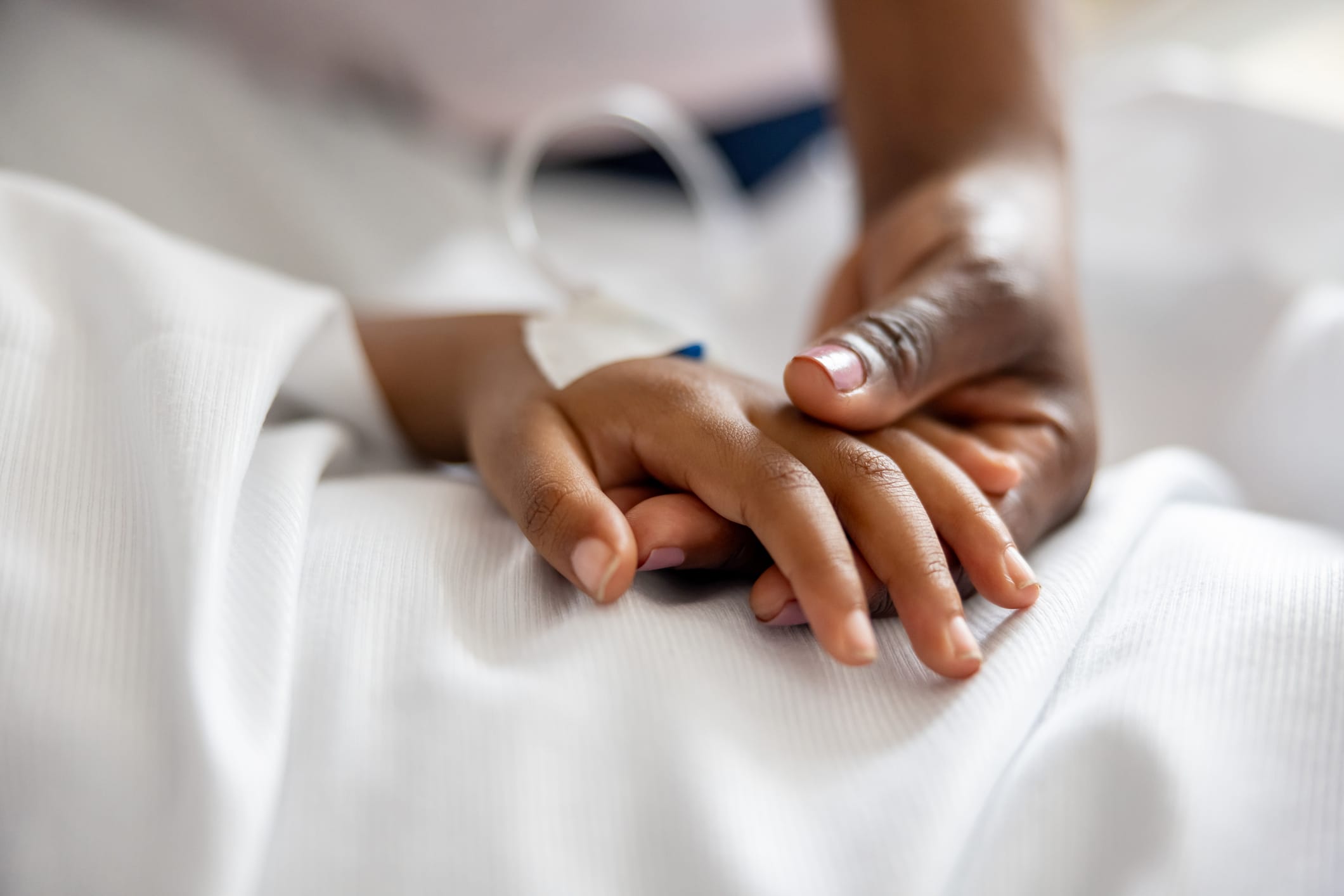
My name is Steffni, and this is how I was diagnosed with Duchenne muscular dystrophy (DMD).
In May of 1998 I was born into the world with no signs of having an illness. I passed all the tests as a newborn, again with no signs whatsoever of illness.
Between the ages of two years old and three years old, my mother began to notice an increase of me falling a lot. She noticed that as I would fall I had no strength to catch myself and break my fall with my arms. As it continued to happen multiple times my mother and father agreed that it was time to have me checked out by my pediatrician. He informed my parents that it was just a stage I would eventually get over, but it only continued to get worse.
My mother decided that she wanted a second opinion because nothing was getting better. My parents switched to a new pediatrician, and my mom says that the day of the appointment my doctor took a look at me and said she was more than sure I had a form of muscular dystrophy and that I needed to be sent to Scottish Rite for Children, a pediatric hospital in Dallas, Texas, for more testing.
They did a biopsy on my thigh of some of the muscles and tissue. When the results came back weeks later, my parents were told they needed to drive back to Dallas for the results.
A rare diagnosis
It was no news that any parent would want to hear. The doctor came in with the devastating news that I had Duchenne muscular dystrophy. This was very rare, because the disease is known to mainly occur in males. Only 1 in 50 million females have it.
There was more to it: the doctor gave my mom and dad the heartbreaking news that my life expectancy was to be nowhere past 7 years of age. I was also diagnosed with severe scoliosis — my spine was curved, and was only expected to get worse.
I can’t imagine the hurt and pain they felt knowing that after that moment, there was a long journey ahead.
We were scheduled to be seen in Dallas every three to six months, and at Children’s Hospital in Dallas by a neurologist. At the age of 6 I had my first big procedure, extending my ligaments in my ankles because I had started to walk on my tiptoes or on the sides of my feet.
When I was 7 years old, in 2005, my father passed, and shortly after that I completely stopped walking. I was no longer strong enough to hold up my own body weight. I was put into my first electric wheelchair and used it full time while I attended public school.
At the age of 10 I was pulled out of school at the end of my 4th grade year and was put into the hospital for over a month due to needing a feeding tube placed. Around that time I weighed 32 pounds.
A decision, and a blessing
The following year my mom was forced to make a very big decision. The doctors wanted to place me in the hospital for three months and attend school in the hospital while they placed a halo on me and did halo traction therapy. Their initial hope was to see how well my spine would do in halo traction for the three months and see how much they could get my spine to straighten out, and then do scoliosis surgery to fix my curvature. She made the decision to go ahead with the whole journey.
In March of 2010 we packed our things and just us two headed to Dallas. The very next day after arriving I had surgery to place the halo and start the three-month process. After a week of healing from the surgery — which included having intense headaches for a week straight — we were finally able to start with the traction. During the three months there, multiple different tests were done with the muscles, and some tests were done with the lungs as my spine was slowly stretching. Fast forward two months in, and the doctors were slowly becoming worried that maybe scoliosis surgery wasn’t the safest thing for me to do due to the muscular dystrophy and how weak my lungs were.
The spinal surgery was expected to last at least 15 to 18 hours, and I’d have to be on my stomach the whole time. My lung pressure was not strong enough, and was not showing enough improvement to go through with the surgery. This called for an alternative plan. Since I was staying stable with the halo and nothing was getting worse nor getting completely better, they decided to try and see if we could make the halo a permanent thing. It was the safest route to take. After three and a half months they finally released me to go home and continue the halo traction therapy and travel back to Dallas every six months.
I went back and attended regular public school again. Life went back to normal, except the halo was now a part of me. 16 years later, I am still in my halo. The plan for now is for it to be a part of me until the end. Surgery is no longer an option.
I’ve come to terms with the fact that the halo is what I need to continue to live this happy life I am blessed with. I wasn’t expected to live past 7 years old. Now 20 years past that, I am still here, and it’s such a blessing. 16 years total so far with the same one halo. The halo is what has made me me, and it’s the best decision my mom could have ever made for me.
Sign up here to get the latest news, perspectives, and information about DMD sent directly to your inbox. Registration is free and only takes a minute.
